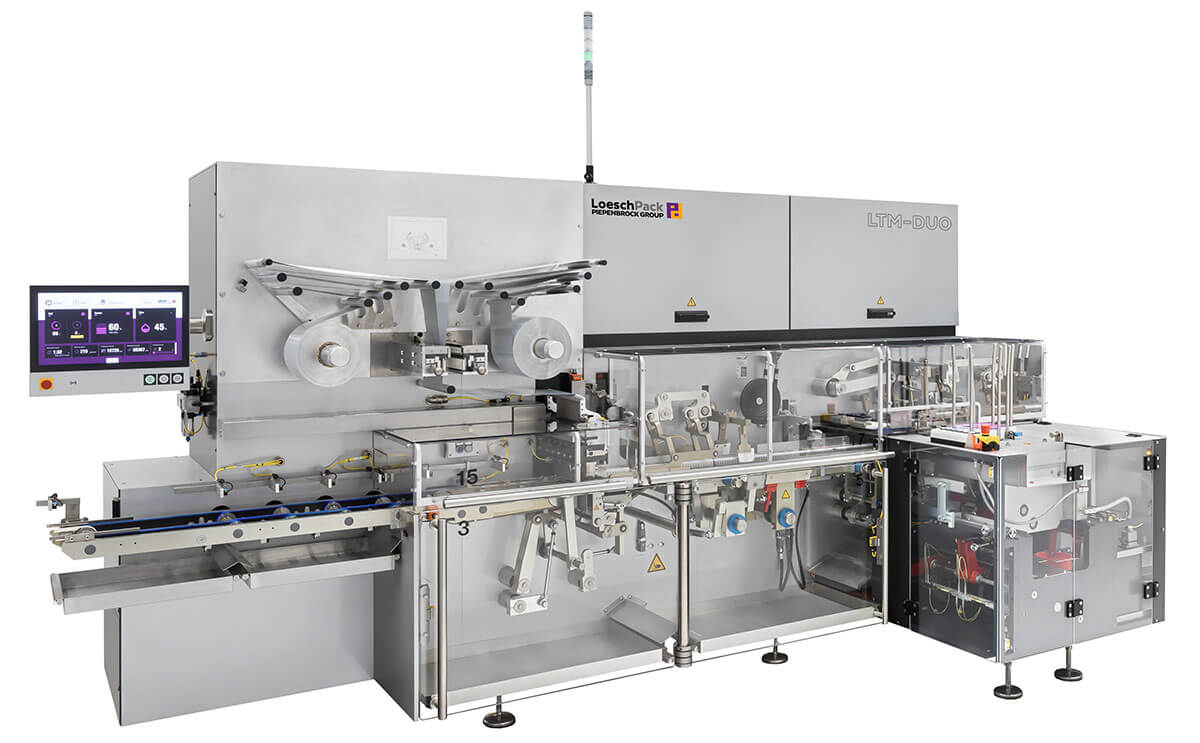
Integrating a Packaging Machine into an Existing Line
A retrofit is an integration project with an equipment purchase inside it. Five joins decide what the new machine delivers: product transfer, controls, speed matching, access and who owns the finished line.

Your new machine arrives built, tested and ready to run.
What decides the result is everything around it. The conveyor that feeds it. The controls that talk to it. The floor it stands on, the space around it and the crew who strips it down at the end of a shift. A retrofit is an integration project with an equipment purchase inside it, and the integration is the half worth engineering first.
What follows is what to settle before anyone quotes. Every item on the list is inexpensive to decide now and shapes what the line delivers for the next two decades.
The five joins
Product transfer
How does product physically get in, and out? Orientation, pitch, height, lane count and whether product arrives in a continuous stream or in surges. A machine engineered for neatly pitched product delivers its performance envelope once the infeed presents product that way, so infeed design is where a retrofit earns its rate.
This is the item in the scope that repays attention fastest. Where an existing discharge runs uneven, evening it out is usually the best value in the whole project.
Controls
The new machine has to know when to stop, and the equipment either side has to know when it has. Agree the signals explicitly: run permission, fault propagation, emergency stop grouping and how each machine reports its state to whatever collects your production data.
Write the specifics into the order. Which protocol, which side implements what and who tests it. A controls interface defined at quotation is a controls interface that works on the first day of commissioning.
Speed matching
Output belongs to the slowest sustained stage, so match the stages to each other. Compare sustained rates across the line under production conditions, then size the new machine to the flow it will be given, with headroom where you plan to grow into it.
Where a mismatch is intermittent instead of structural, buffering is the answer and it costs a fraction of new equipment. Packaging automation ROI covers how to value the difference.
Space, services and access
Floor area is the obvious constraint and rarely the binding one. Check ceiling height, access for operation and maintenance, room to swing a guard open, the route the machine takes to reach its position and whether power, services and drainage arrive in the form it needs.
Then plan cleaning access deliberately. A machine that can be stripped down and rebuilt inside your sanitation window hands the shift its time back every single day, so design for it at layout stage.
Ownership
When the combined line is being tuned to its number, who leads that work? With one supplier the answer is obvious. Across several it belongs in writing, because line performance is a property of the joins and every join deserves a named owner.
Ask the same question about the years after commissioning, since whoever installs a retrofit is usually who you call when it is time to lift it again. Service and support in North America covers what to establish before you order.
Define acceptance for the line, not the machine
Factory acceptance proves the machine. Line acceptance proves the outcome you are buying, so write the criteria at that level:
- Sustained output over a defined run length, using your product and your material, not a demonstration sample.
- Behavior at the joins, including how the line recovers from an upstream stop without producing waste.
- Changeover timed with your crew and your tooling, across the format range in the specification.
- Cleaning stripdown and rebuild within your sanitation window, performed by your people.
- The full SKU mix, so the line is signed off on the work it will really do.
Write these before the order. They cost nothing at quotation stage, and they give you, PPT USA and the manufacturer one shared definition of success to build toward.
Find the constraint first
Before specifying anything, establish what sets the pace today. Split the time the line is not producing into changeover, stoppages and waiting for product, then log which machine is stopped against which is idle.
The answer is frequently better news than expected. A plant convinced its wrapper is too slow often finds the wrapper waiting a third of the time on an upstream process that surges. That plant needs buffering, and the project it needs is smaller and cheaper than the one it came in asking about.
Where several joins want attention at once, a wider scope can be the better value. Complete and turnkey packaging lines covers where that line sits.
Walk the line with us
Retrofits are where an integration partner earns its keep, and it is what PPT USA exists to do. We are the North American arm of the Piepenbrock Group, family owned since 1913, alongside LoeschPack and Hastamat themselves. We specify, install, commission and support these lines across the United States, Canada and Mexico, so a retrofit we scope is one we then make work on your floor.
Send us a line layout, what the equipment either side is and how old it is, your current sustained output and the sanitation window you work in. You will get a clear read on where the constraint sits, what removing it is worth and exactly what each interface has to do. Our team and the manufacturer then engineer the configuration around the output you need.