Complete and Turnkey Packaging Lines: When One Scope Is Worth It
One supplier or five? It comes down to who is accountable for the finished line and which engineering you want to own in house. Both routes work, and the scope decides which one fits your project.

One supplier or five?
It comes down to two decisions. Who is accountable for the finished line and which engineering you want to own in house. Both routes deliver excellent results, and the right one follows from where your project's risk actually sits.
What a turnkey scope covers
The machines are the visible part and the smaller share of the engineering. A complete line scope also covers the conveying between stages, the buffering that absorbs each stage's variation, the controls that let the machines agree on when to run and stop, the installation, the commissioning against a line-level number and the training that lets your crew get the most out of it.
Every one of those items exists in a machine-by-machine project too. The difference is who owns them. Buying stage by stage keeps that work with your engineering team, which is a sound decision when the team has ability and capacity for it.
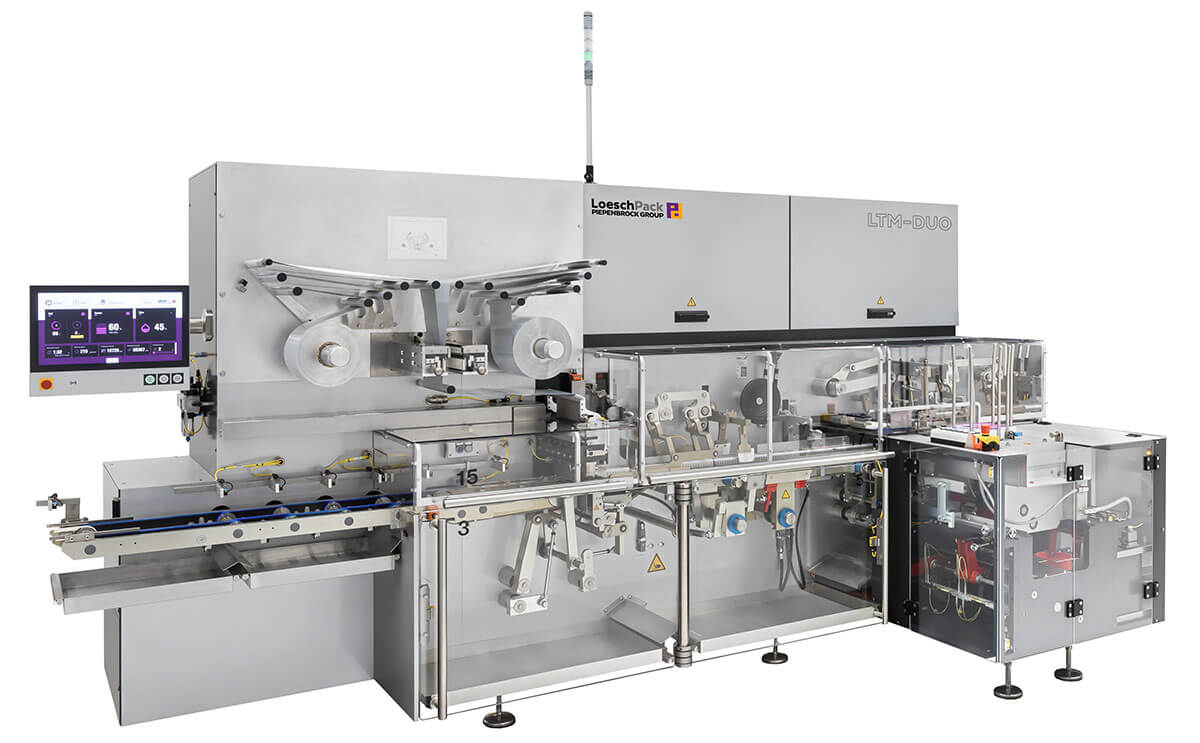
Both LoeschPack and Hastamat build complete packaging lines alongside individual machines, with expertise in every area from engineering and construction through commissioning, training, technical support and spare parts supply. That is a deliberate strength of both platforms: the engineering that designs the wrapper or the bagger also designs the line and support around it.
When the single scope earns its premium
- The joints are your gain point. If product transfer, timing or fault recovery between stages is what sets your pace today, an integrated scope puts one engineering team on exactly that.
- The product is demanding. Fragile, sticky, warm or irregular product rewards handling designed as one system, because each stage's decisions shape what the next one can do.
- Is it a greenfield line or a whole-line replacement? With nothing to interface to, a single scope removes joints before they are ever created.
- Your engineering capacity is committed elsewhere. Somebody has to own the integration, and buying the role is usually cheaper and faster than improvising it.
- The line-level number is contractual. If you want to hold one organization to sustained output across the whole line, a single scope is how that is done.
When buying machine by machine is the better call
This half of the answer matters just as much, and we give it the same attention in a scoping conversation.
- Your surrounding equipment already runs well and the interfaces are documented and understood.
- The project is one stage and no more. If a single machine sets the pace and everything else is healthy, replacing that machine is the cheapest correct answer.
- You have in-house engineering capacity and would sooner deploy it than buy it.
- Capital is spread across budget years, which incremental purchasing supports naturally.
- The format or the product is still developing. Locking a whole line around a specification that is still moving is worth postponing until the specification settles.
Integrating a machine into an existing line covers how to do the incremental route well.
The question underneath both
Whichever route you take, the same engineering has to happen. Somebody defines the interfaces, somebody owns product transfer, somebody makes the controls agree and somebody is accountable for the finished rate at the end of the line.
A turnkey scope puts one name against each of those. A split scope keeps them with you, which is entirely reasonable when you are equipped for it. Both work well when the choice is made on purpose, so make it a decision rather than a default.
Scoping it properly
Whichever way you go, define these before anyone quotes:
- The boundary. Where product is handed to the purchased line and what the line has to deliver at the far end.
- The line-level number. Sustained finished output, over a defined run, with your product and your material.
- The format range. Every SKU the line must run, and the changeover time you want to hold.
- The interfaces. Mechanical transfer and controls signals at every joint, with a named owner for each.
- Acceptance. What has to be demonstrated, by whom, with whose product, before you sign.
That list is identical for a turnkey line and a single machine. Only the number of names beside each item changes. What an industrial packaging machine costs covers what belongs in the budget either way, and service and support covers the relationship that outlasts the project by two decades.
Tell us the boundary and we will tell you the scope
A single scope works when one organization can carry it, and that is the case here. LoeschPack has built wrapping, feeding and cartoning since 1919 and is the technology and quality leader in high-speed confectionery packaging. Hastamat has built weighing and bagging for over 60 years and brings the same standing to precision weighing, dosing and hygienic bagging. Lake Champlain Chocolates in Vermont runs a LoeschPack wrapping and cartoning line as one scope from one supplier. Both manufacturers belong to the Piepenbrock Group, family owned since 1913, and Piepenbrock Packaging is its North American arm: the operational team that specifies, installs, commissions and supports these lines across the United States, Canada and Mexico.
Send us where your product comes from, what has to leave the packaging area, your target output and what sets the pace today. You will get a scope that names every interface and its owner, and a line-level output figure you can plan around. If one machine is the right answer instead of a line, we will tell you that too.