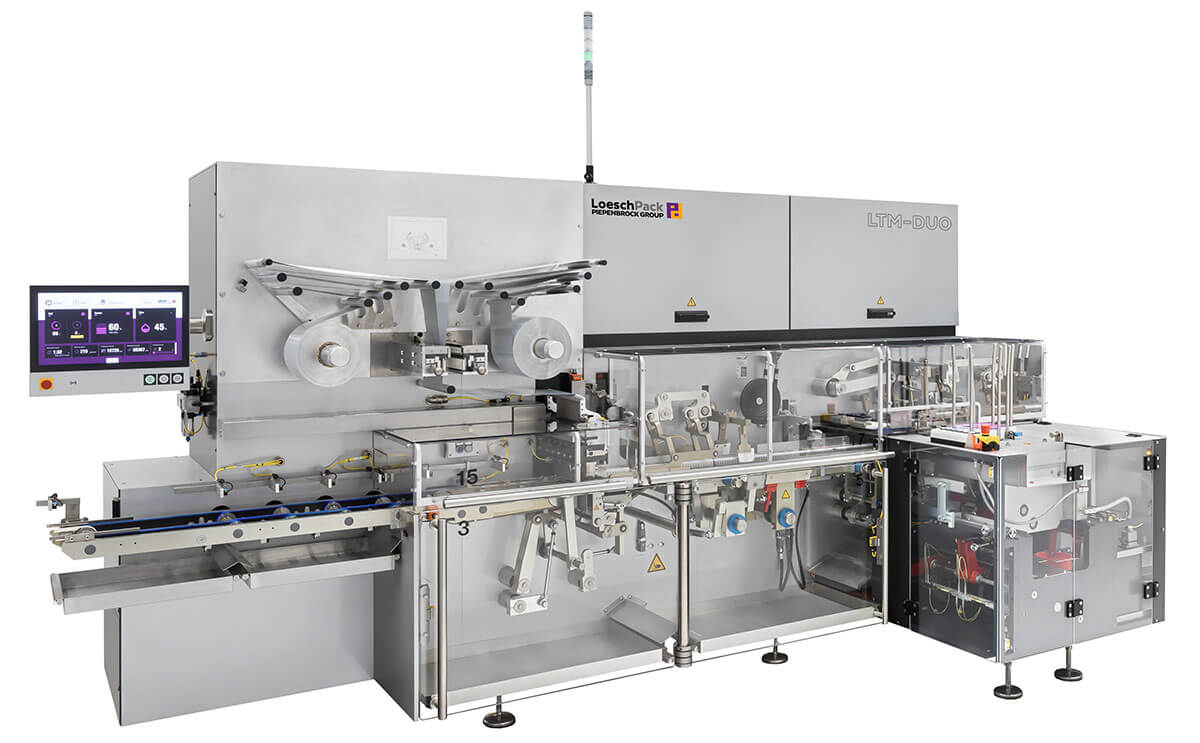
Packaging Machine Service and Support in North America
A packaging machine is a twenty-year relationship with whoever services it. Evaluate that relationship as carefully as the equipment, and settle commissioning, parts and training while they are easy to agree.

A packaging machine is a twenty-year relationship with whoever services it.
The purchase takes a few months. Everything after it, the spare parts, the format changes, the operator turnover and the upgrade nobody planned for, is a relationship with an organization. That relationship is worth evaluating as carefully as the equipment, and it is easier to assess before you sign than after.
The question behind the question
When a plant asks about support for European machinery, what it wants to know is simple: when something needs attention at two in the morning, is there somebody on this continent who knows this machine? For LoeschPack and Hastamat equipment in North America, that is Piepenbrock Packaging Technologies USA.
Taking the call and solving the problem are different capabilities. Diagnosing a fault, sourcing the right part and sending an engineer who has commissioned that model takes an organization that specifies and integrates the equipment itself. That is the capability worth testing during the sales process, because it is the one you will be using for two decades.
What to establish before you order
Who commissions the machine
Commissioning is where a machine becomes a working line. Ask who performs it, where they are based and how many of these they have done. An engineer who has commissioned your model repeatedly finds in an afternoon what a generalist finds in a week, and that difference shows up directly in your ramp-up curve.
Where the parts are
Ask which parts are held in North America and which ship from the factory, and take the answer as a list. Then build your own holding around it: predictable wear parts, format tooling for every SKU and anything with a long lead time. A parts list agreed at commissioning is one of the cheapest pieces of insurance in the whole project.
Who trains your people
Training is the cheapest line in the project and one of the highest returning, so protect it in the schedule. Agree the scope and the timing in the order, and hold it on your machine with your product, because a crew trained on the real SKU mix is a crew that runs the line fast from the start.
What the agreement covers
Support arrangements vary, and the detail is what makes them useful. Establish what response looks like under the agreement you are being offered, what is included and what is chargeable, and how parts are priced and dispatched. A clear scoped agreement is something both sides can plan a production year around.
Whether the answer comes with engineering behind it
The most useful test is a technical one. Ask a hard question about your own application during the sales process and see what comes back. An organization that specifies and integrates these lines will engage with it on the spot, and that same engagement is what you get when you call about a running line.
Where Piepenbrock Packaging sits
Piepenbrock Packaging Technologies (PPT USA) is the North American sales, execution and service partner for LoeschPack and Hastamat, and we are the operational arm of the manufacturers rather than a distributor or a reseller. The same organization that specifies your line installs it, commissions it and supports it afterward, across the United States, Canada and Mexico.
That removes a handoff. The people who agreed what the line would do are the people accountable for it doing that, so a project never passes from one company's responsibility to another's. It is the same argument that decides scope on a new line, covered in complete and turnkey packaging lines, and the same one that decides who owns the joins on a retrofit, covered in integrating a machine into an existing line.
Behind us sit two manufacturers with a century of production history between them. LoeschPack has built wrapping machinery since 1919, exports around 85 percent of what it makes and builds to ISO 9001 and ISO 14001. Hastamat has built weighing and bagging equipment since 1953 and supports it through more than 50 sales and service partners worldwide. All three companies belong to the Piepenbrock Group, family owned since 1913 and now in its fourth generation, so the relationship between the North American team and the factories is corporate. When we escalate something, we are calling colleagues.
Support is scoped to your service agreement, and we will walk you through exactly what that covers before you sign it.
Building the support case into the purchase
Five things belong in the order, where they are straightforward to agree:
- Commissioning scope, including who performs it and what has to be demonstrated before acceptance.
- The recommended spare parts list for your machine and your duty cycle, produced at commissioning.
- Training scope and timing, on your machine, for operators and maintenance separately.
- The service agreement terms, including what is covered and how parts are priced.
- Documentation, in the language your maintenance team works in, covering the machine as built.
None of these add cost at order stage, and every one of them compounds in value over the life of the line. What an industrial packaging machine costs covers where they sit in the total.
Ask us something difficult
The fastest way to evaluate a technical partner is to give them a real problem. Send us your application, your constraint or the fault you have been living with, and see what comes back.
We specify, install, commission and support LoeschPack and Hastamat lines across the United States, Canada and Mexico. If your question turns out to be upstream of anything we sell, you will get a straight answer on that too.