What Packaging Machine Do I Need for My Product?
Four answers decide almost every packaging machine selection, and none of them are about machines. What the product is, what the pack has to be, how fast the line runs and where the project starts and stops.

Nobody starts this search knowing what the machine is called.
You know the product. You know the pack it has to end up in, roughly what it should cost to produce and how fast the line needs to run. What you are missing is the vocabulary, and every comparison you find online assumes you already have it.
Four answers will get you there, and none of them are about machines. Once you have them, the equipment category is usually obvious.
Start with the product
The most useful distinction in packaging equipment is whether your product is discrete or loose. It sounds obvious. It also settles more of the specification than anything else you can ask.
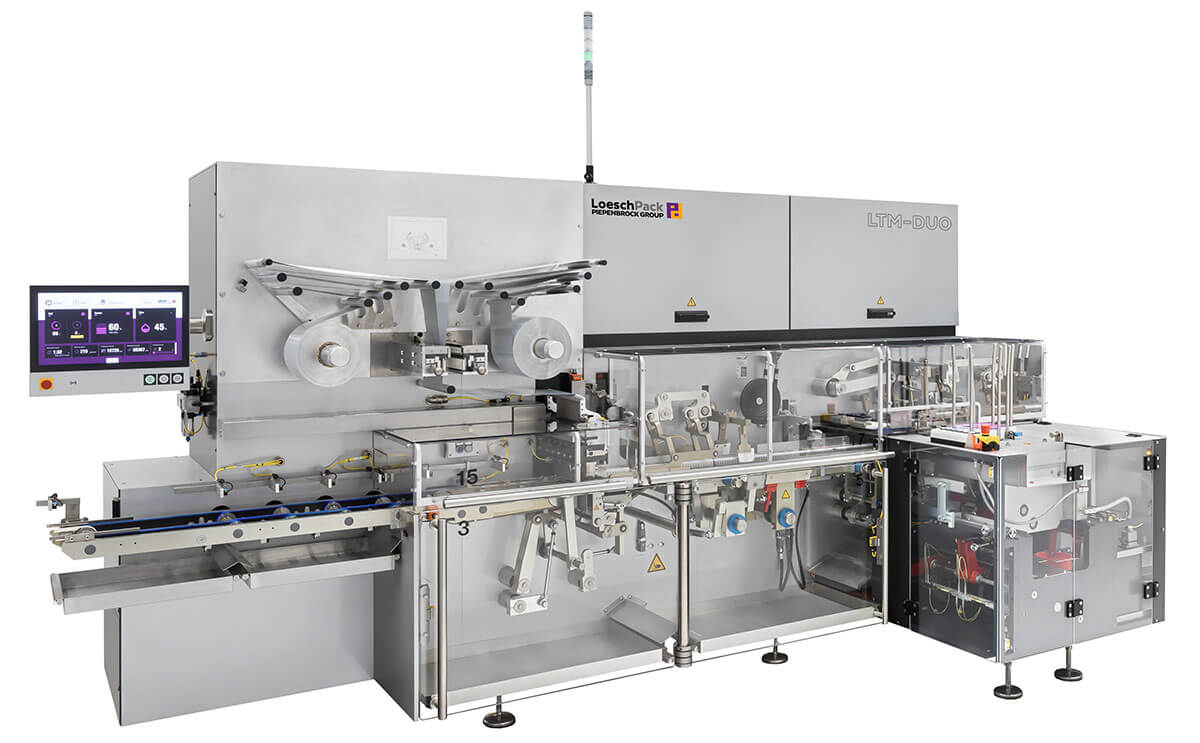
Discrete products hold their shape and can be picked up one at a time: chocolate bars, protein and granola bars, biscuits, wafers, tablets, bar soaps. They get oriented and presented to the machine individually, and they usually run horizontally on a flow wrapper or a fold wrapper.
Loose products are handled by quantity: pretzels, stackable chips, extruded snacks, nuts, frozen vegetables, shredded cheese, confectionery pieces, pet food. Nobody orients frozen broccoli. These get weighed into a target quantity and dropped into a bag formed around them, on a vertical form fill seal line fed by a multihead weigher.
Some products sit between the two, and those make the interesting projects. Cookies are the classic case. A cookie is discrete and flow wraps beautifully in a stack or slug, and it is also delicate enough that plenty of producers weigh and bag it instead. The right answer follows from the pack your market wants and how the product travels. Cookie and wafer packaging machines works through that decision.
Then the package format
The finished pack decides more of the machine specification than any other single input, because it sets your material, your seal geometry and everything downstream.
- A single-product flow wrap sealed on three sides is the standard bar and biscuit format. Fast, material-efficient and well understood.
- A pillow bag formed vertically suits anything weighed by quantity, and your bag width and length set the machine's format range.
- A folded wrap with no heat seal is how premium chocolate tablets and pralines are presented. A different machine class entirely, and a LoeschPack specialty.
- A rigid carton, end-load, top-load or wrap-around, is downstream equipment. It gets sized from the primary pack, never chosen independently.
Format flexibility matters as much as the format itself. A line that runs one SKU beautifully and takes four hours to change over is a different commercial proposition from one running three formats with a twenty-minute change. Decide that balance deliberately and specify the machine around it.
Then the rate, measured at the right end of the line
State your target as finished packs per minute at the end of the line, sustained over a shift. That is the number a line is engineered around, and it is the one Piepenbrock Packaging and the Piepenbrock Companies configure the whole system to deliver.
A published maximum shows what a platform can do when it is fed properly, with product arriving oriented, pitched and evenly spaced. Infeed, buffering and distribution are what turn that envelope into your line average, and they are usually the most cost-effective part of the line to get right.
Availability belongs in the target alongside speed. A line that holds a steady rate with few stoppages out-produces a faster machine that stops often, and changeover is production time worth counting in the same calculation. Packaging automation ROI works through where output is really won.
Then the line boundary
The last question is the one most often left open: where does this project start and stop?
A scope beginning at the discharge of an existing process and ending at a palletized case is a very different project from one machine dropped into a line that already exists.
Being explicit settles who owns product transfer, who owns the controls handshake, who answers the phone when the line needs attention, and what acceptance looks like. Set it early and every quote you receive is comparable. Complete and turnkey packaging lines covers when a single integrated scope earns its keep.
Where each answer leads
With those four in hand, the branch is usually clear:
- Discrete products, wrapped individually or in slugs: flow wrapper ROI and chocolate and bar packaging.
- Loose or bulk products, weighed and bagged: the VFFS buyer's guide and how multihead weighing reduces giveaway.
- Still weighing up the two: VFFS versus flow wrapper is the direct comparison.
- Retail cartons downstream of either: cartoning machine selection.
- Adding to a line that already exists: integrating with an existing line.
What we need to scope a real project
Piepenbrock Packaging is the North American arm of the Piepenbrock Group, family owned since 1913, alongside the two manufacturers themselves. LoeschPack has built flow and fold wrapping, feeding and cartoning since 1919 for confectionery, bakery and consumer goods, and is the global technology and quality leader in high-speed confectionery packaging. Hastamat has built multihead weighing, dosing and VFFS bagging for over 60 years, specializing in sticks-like products and stackable chip packaging, and brings the same standing to precision weighing and hygienic design. Between them they cover both architectures above, and one North American team specifies, installs, commissions and supports them both.
To come back with a real recommendation instead of a catalog, we need:
- The product: what it is, its dimensions and weight, and how it behaves when handled, stacked or dropped.
- The package: the format you need to sell, the material you intend to use, and whether that material is fixed or still open.
- The rate: finished packs per minute, sustained, and the number of shifts.
- The boundary: where product will be handed to the line, and what the line has to deliver at the other end.
- The constraint: the floor space you have, and what is setting your pace today.
That is enough for us to identify the architecture and tell you what is worth testing before anyone quotes hardware. Send it over and you will get a straight recommendation, in plain language, with the reasoning shown. No obligation and no sales sequence.